Rig architecture
Controls, deformation and pivots that stay predictable under real performance.
 wipareqo
Contact
wipareqo
Contact
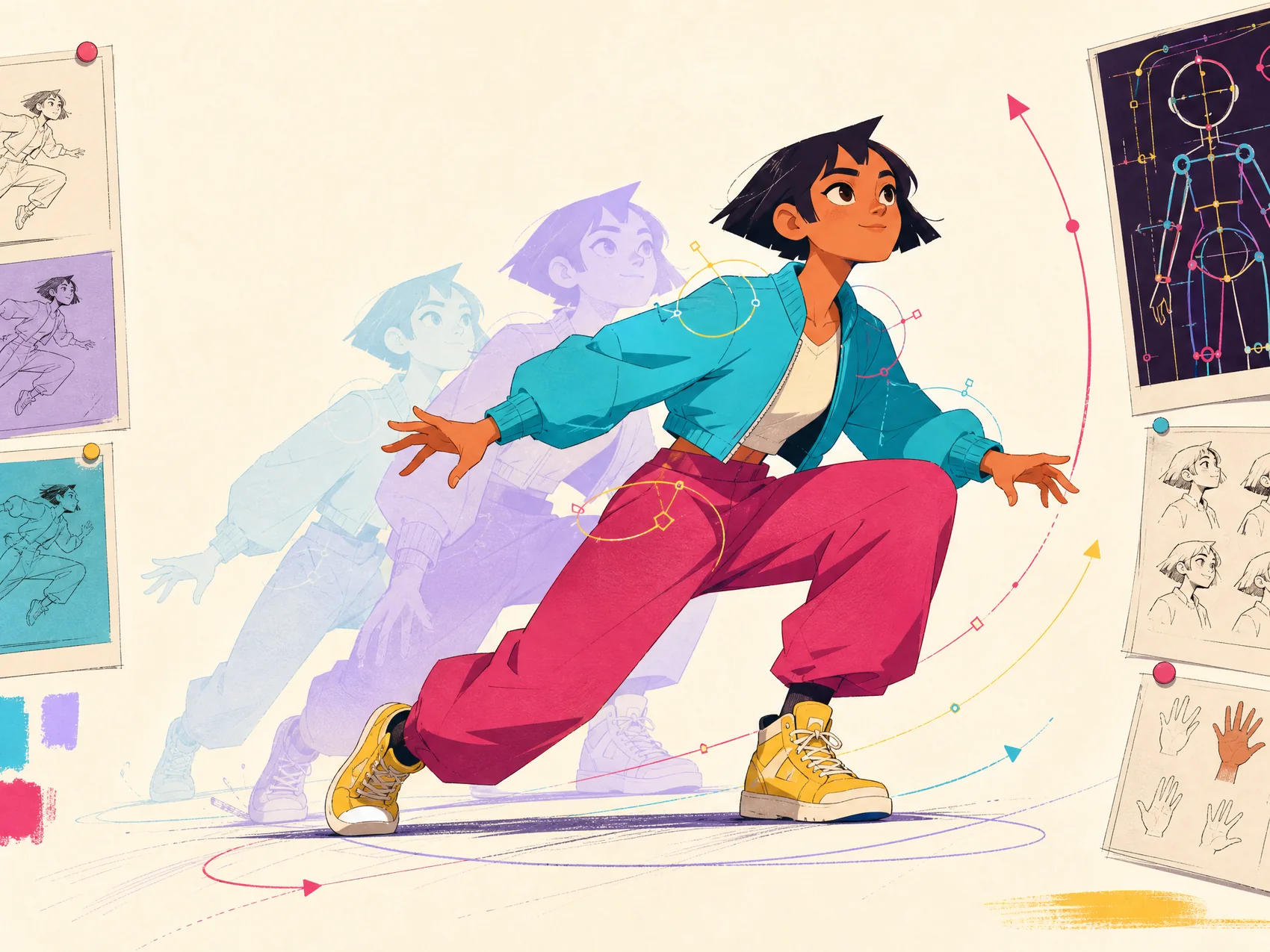
SCENE 01 Character systems
We rig illustrated characters and animate the choices that make them feel present: weight, timing, gaze, breath and intent.
SCENE 02 What we shape
Controls, deformation and pivots that stay predictable under real performance.
Poses with readable weight, balance, overlap and clean directional intent.
Eyes, brows, mouth shapes and micro-timing built around the emotional beat.
Named controls, pose libraries and playback notes that the next artist can trust.
SCENE 03 Interactive pose test
The direction reads early: compressed hips, counter-rotated shoulders and a gaze already committed to the destination.
Discuss a performance testSCENE 04 Rig anatomy
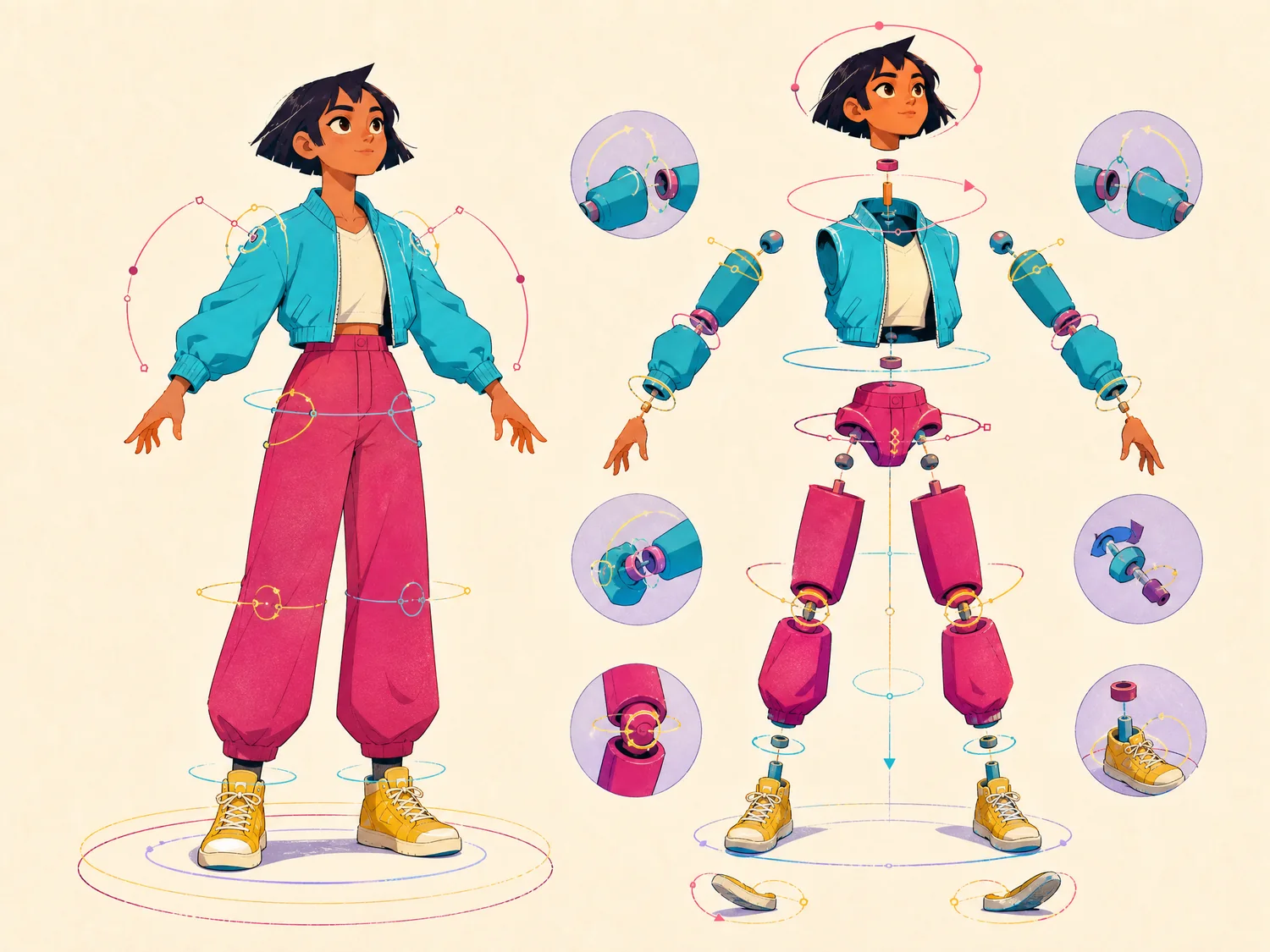
ACTIVE CONTROL GROUP
Foot roll, knee direction, hip rotation and shoulder counter-action remain understandable at speed and at the edge of the pose range.
SCENE 05 Facial performance
We plan eye focus, brow pressure, mouth tension and the tiny holds that let an audience read what the character is deciding.
Plan an expression pass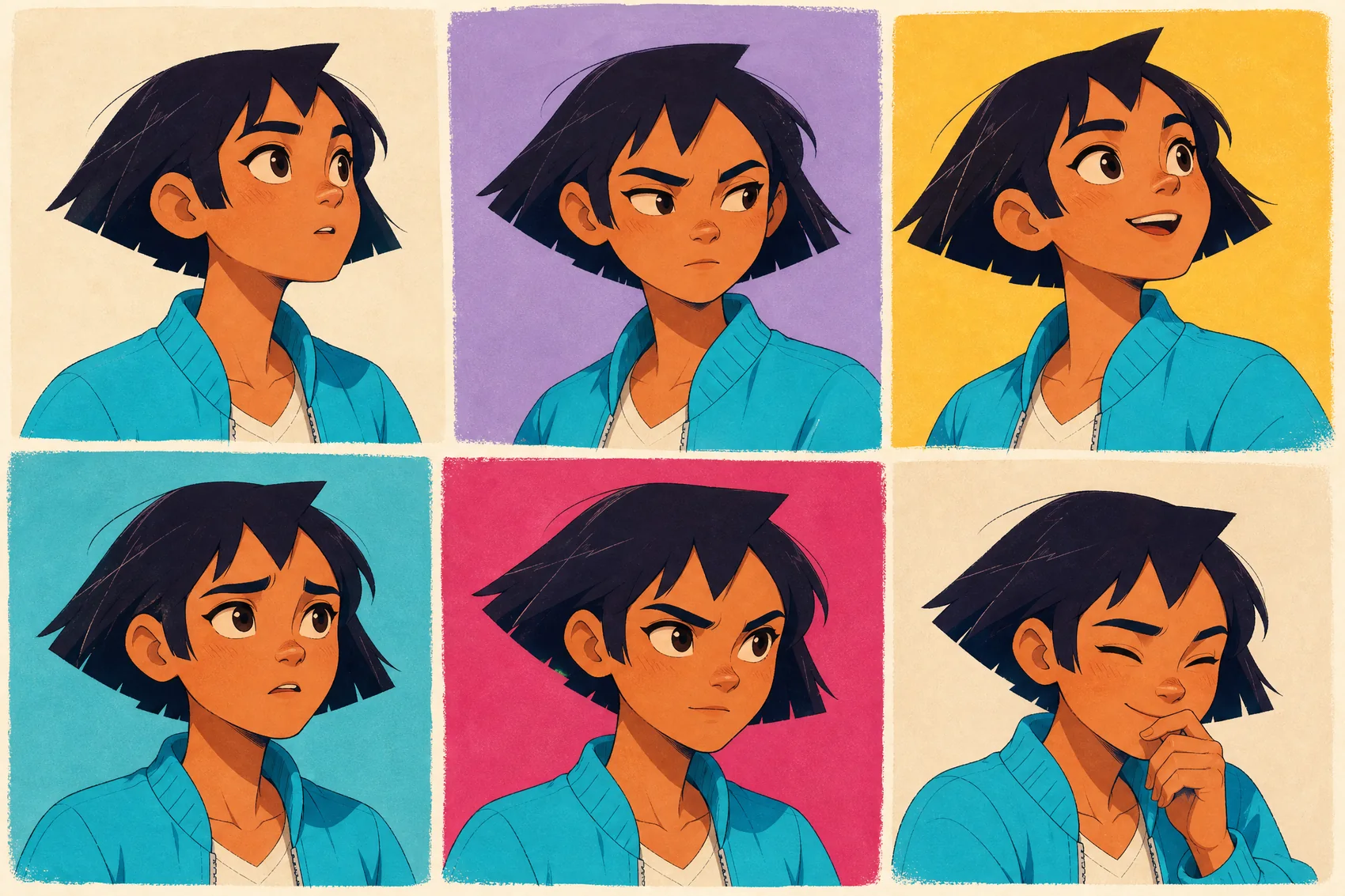
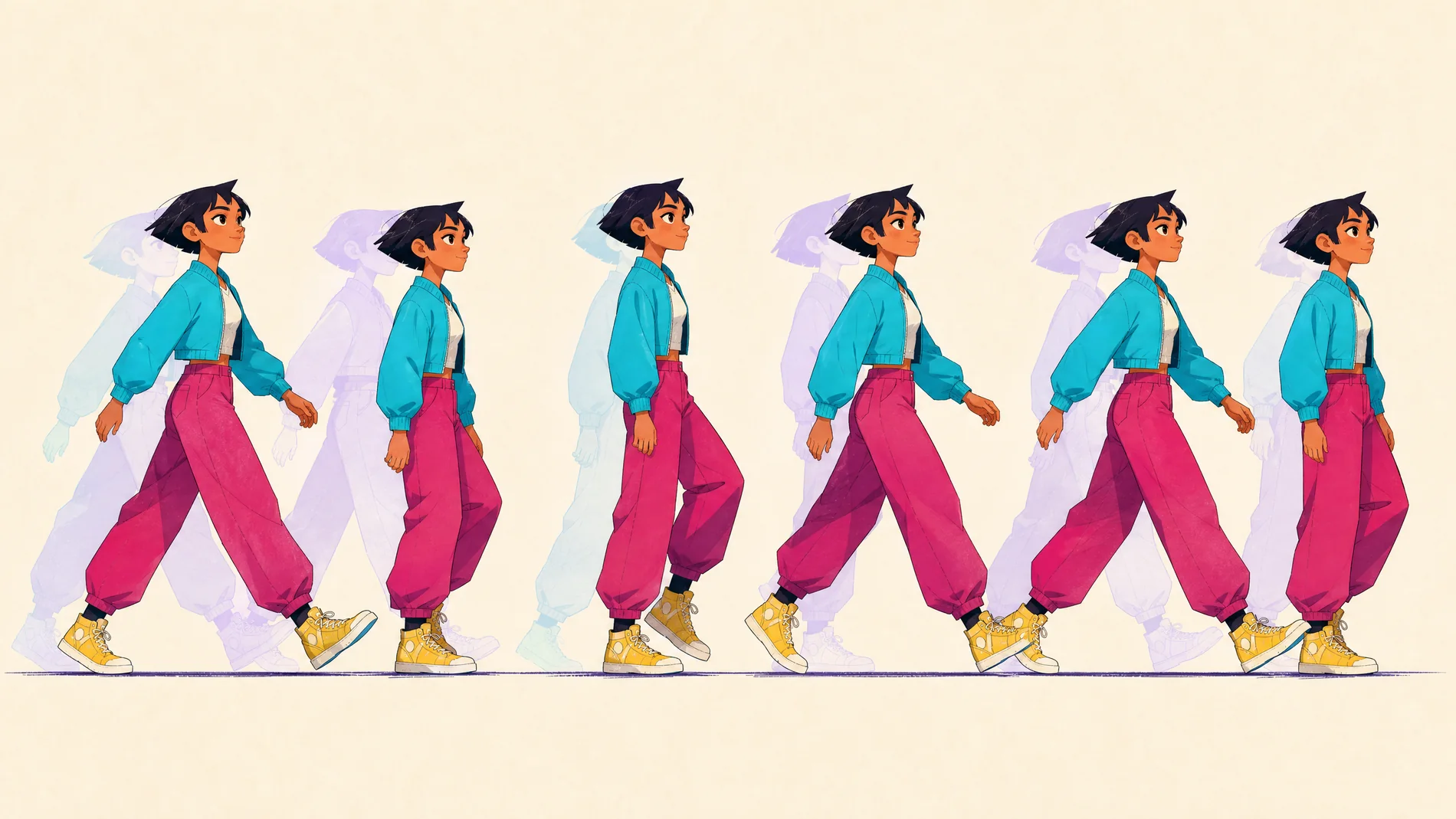
SCENE 06 Walk cycle room
A walk is not six drawings repeated. It is attitude organised through contact, compression, passing and lift.
SCENE 07 Secondary motion
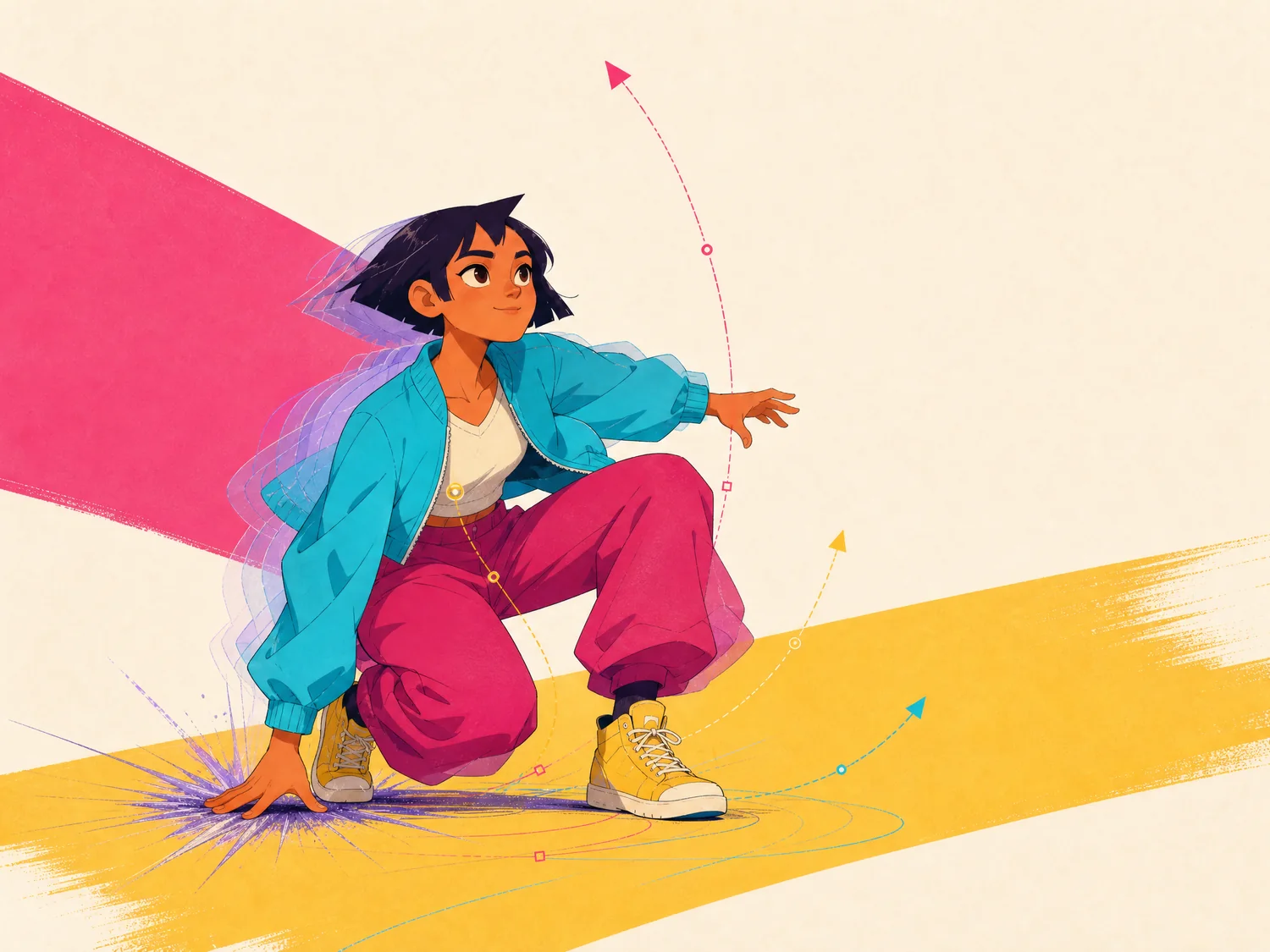
Hair, clothing and soft forms continue with their own rhythm, supporting the action rather than decorating it.
SCENE 08 Clean handoff
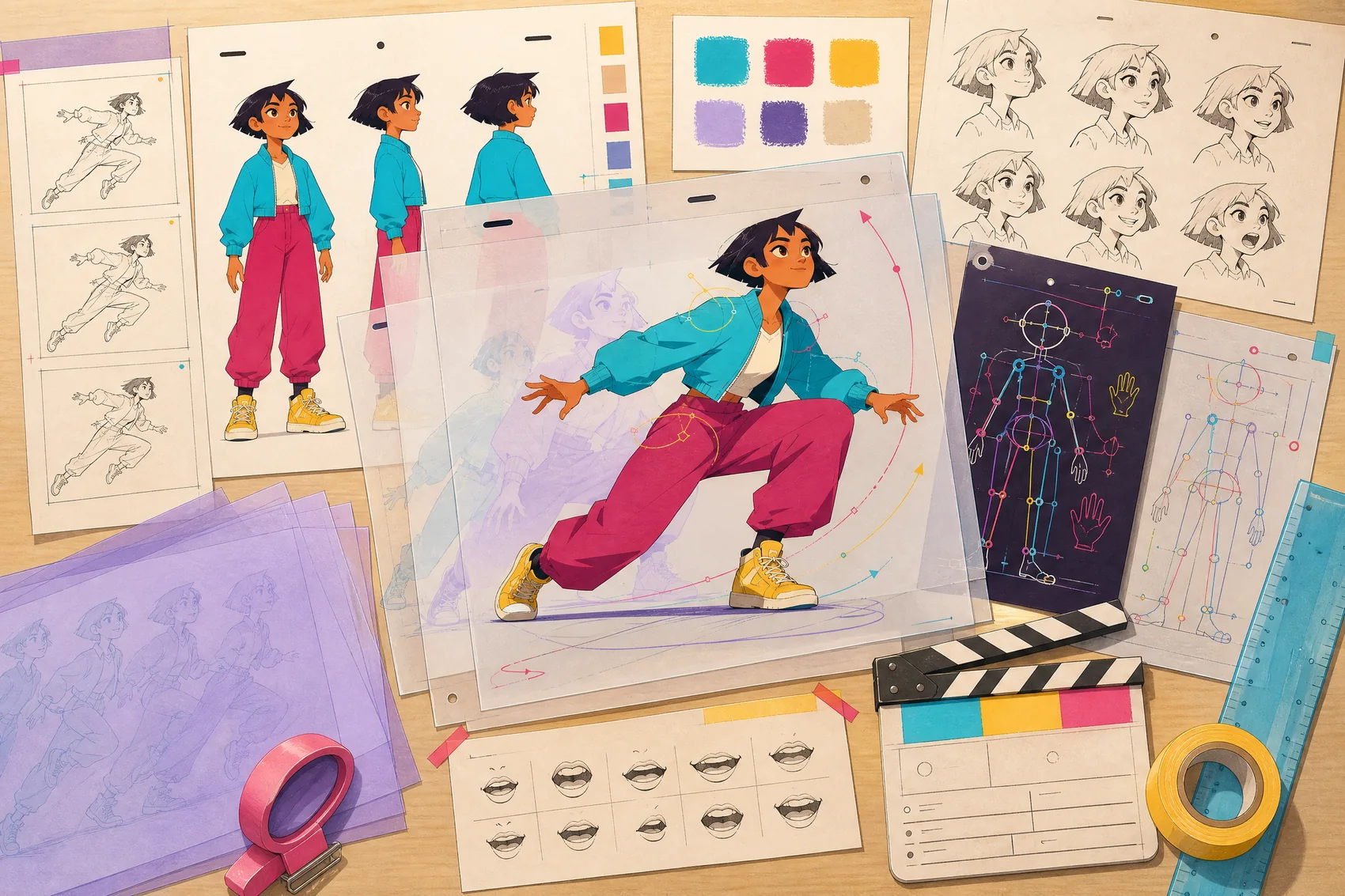
Control naming, pose references, mouth sets, playback notes and export constraints arrive together.
SCENE 09 Working sequence
Identify proportions, graphic rules, hard limits and the poses the character must survive.
Create a rig around production actions, not a generic catalogue of handles.
Push silhouettes, facial shapes and deformation before polished animation begins.
Block intent, refine timing, add overlap and deliver a documented working scene.
SCENE 10 Cue sheet
We can assess layered vector or raster artwork, model sheets and existing rigs. The first review checks separation, hidden forms, pivots and the expected shot range.
Yes. We first isolate whether the issue belongs to hierarchy, controller logic, deformation, artwork preparation or animation practice, then propose the smallest dependable intervention.
Tool choice follows your pipeline and delivery requirements. We confirm version, plugins, export constraints and ownership before production starts.
Often that is the safest start. A short pose or motion test exposes control, deformation and style questions before they spread across a larger sequence.
The agreed working files, organised artwork, rig controls, animation scene, practical notes and an export or playback check are supplied according to the project scope.
SCENE 11 Project intake
Send the character format, intended shots, delivery environment and the one motion problem you want to solve first.
[email protected]